
By PaulSamuel | Public Affairs Analyst.
Nigeria’s political leaders must be judged by competence, compassion and accountability—not ethnicity, religion or party loyalty.
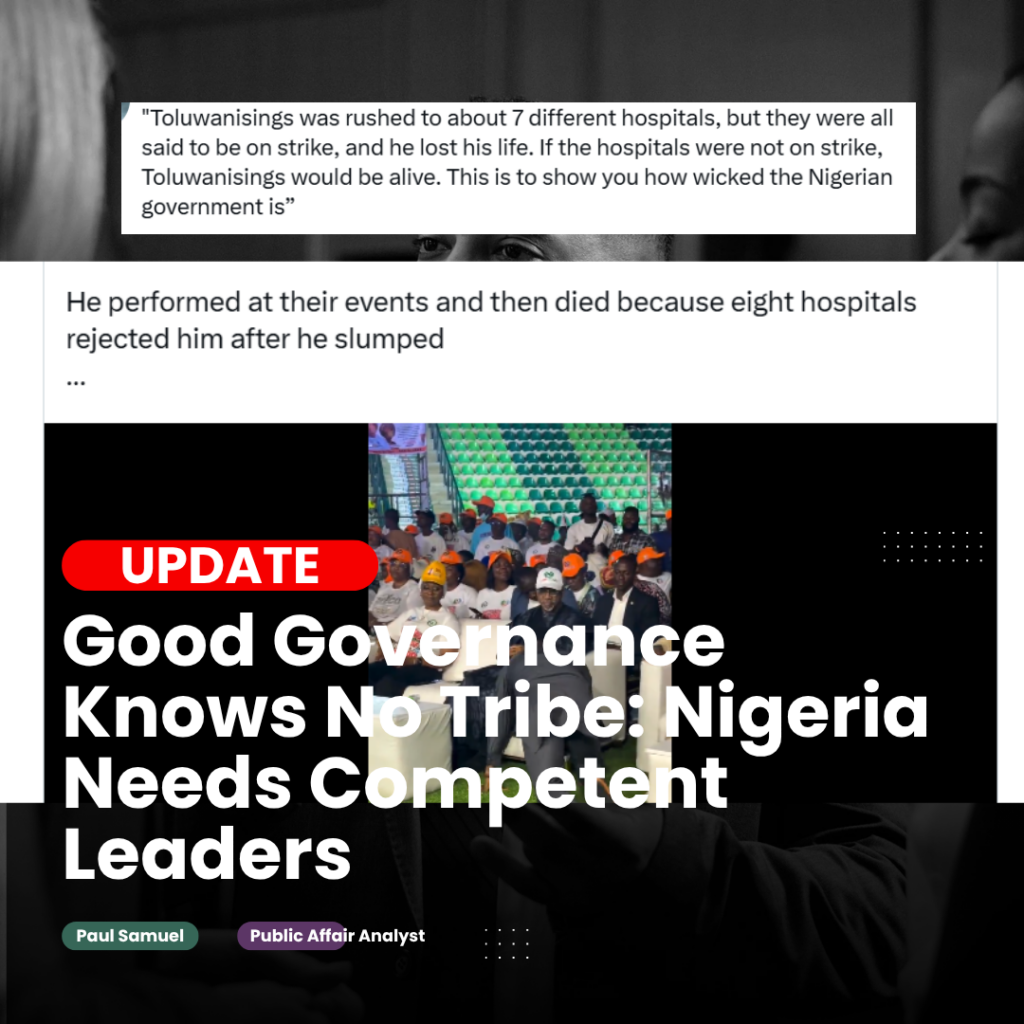
The tragic death of gospel singer Olayemi Bayonile Bolaji, popularly known as Toluwanisings, has reignited an important national conversation: what happens when a Nigerian desperately needs medical attention but cannot find a hospital able to provide it?
According to reports published on October 15, 2026, the singer’s personal assistant said that efforts to save his life took them to between seven and eight hospitals in Ibadan, Oyo State, after he suddenly collapsed. Some facilities reportedly cited a doctors’ strike, while others allegedly declined to admit him.
Toluwanisings died on October 14, 2026. His official cause of death has not been publicly established in the reports cited here.
The circumstances surrounding his final hours deserve a thorough investigation. More importantly, they raise questions about emergency healthcare, hospital capacity, the welfare of medical professionals, and the responsibility of government to build a system that protects human life.
Sources: Premium Times | The Punch
The Question Every Nigerian Should Ask
When a citizen needs emergency medical care, whose responsibility is it to ensure that an effective healthcare system exists?
Government cannot prevent every death, but it has a duty to create the conditions in which citizens can access timely and appropriate treatment. That responsibility includes investing in hospitals, supporting medical professionals, strengthening emergency response systems and ensuring that public health services function effectively.
The reported experience of Toluwanisings should therefore be more than a trending topic on social media. It should prompt serious questions and demand meaningful action.
No Nigerian should have to wonder whether a hospital will have the staff, equipment or capacity to provide urgent treatment when a life is at stake.
Healthcare Should Not Become a Privilege for the Wealthy
The wider evidence reinforces these concerns.
According to the World Health Organization, household out-of-pocket payments accounted for approximately 72% of Nigeria’s current health expenditure in 2023. This means Nigerians paid directly for most healthcare spending from their own pockets.
Source: World Health Organization — Nigeria’s health financing.
For a family with substantial financial resources, an emergency may be difficult but manageable. For a family already struggling to afford food, transportation and school fees, unexpected medical bills can become devastating.
The consequences of a weak healthcare system extend beyond hospitals. They affect productivity, household finances, children’s welfare and the ability of families to escape poverty.
Healthcare is not a favour government grants to citizens. It is a fundamental public responsibility.
Nigerians Are Hungry, Families Are Struggling, and the Economy Must Work for People
Nigeria’s economic challenges cannot be ignored.
In its October 2025 Nigeria Development Update, the World Bank acknowledged improvements in economic growth and other macroeconomic indicators while warning that high food inflation and widespread poverty continued to constrain living standards.
The report highlighted that poorer households can spend up to 70% of their income on food. It also documented a fivefold increase in the cost of a basic food basket between 2019 and 2024.
Source: World Bank — From Policy to People: Bringing the Reform Gains Home.
More recently, Reuters reported on October 15, 2026, that Nigeria’s annual inflation rate eased to 14.63% in September, while food inflation remained at 19.59%.
Source: Reuters — Nigeria’s inflation rate eases slightly.
A decline in the inflation rate does not necessarily mean that prices have returned to affordable levels. It means prices are rising more slowly than before; households can still face substantial pressure from the accumulated cost of living.
These figures tell a story that goes beyond political slogans. Families need affordable food, accessible healthcare, meaningful employment and economic opportunities that allow them to live with dignity.
Economic reforms should be judged not only by revenue figures or growth rates but also by their impact on ordinary Nigerians.
The ultimate measure of economic success is whether people can live better lives.
Public Spending Must Answer to the People
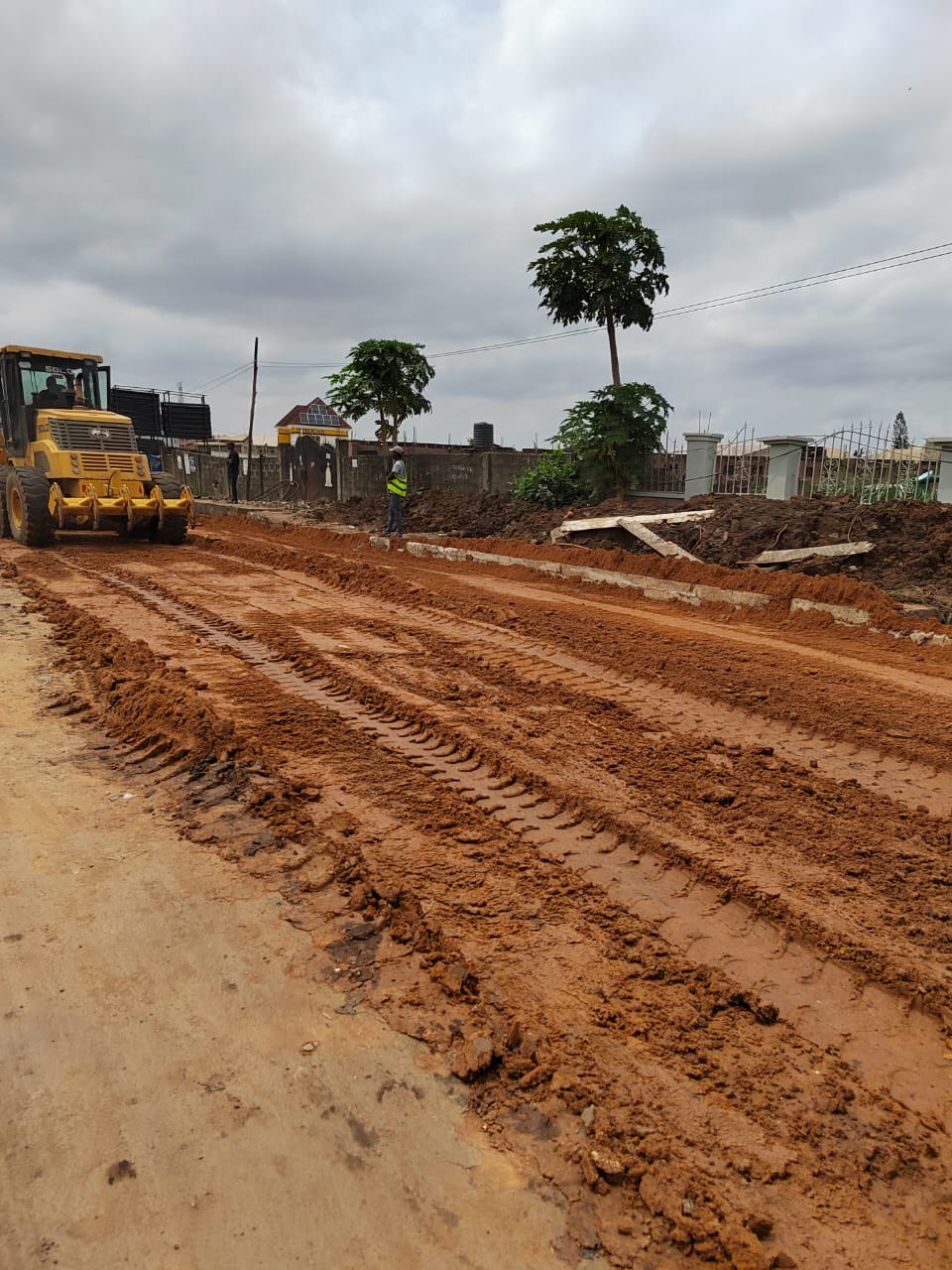
Nigeria needs infrastructure. Good roads, efficient transport systems, reliable electricity and modern public facilities can stimulate economic activity and improve living standards.
But infrastructure development must go hand in hand with transparency, sound planning and accountability.
The Lagos-Calabar Coastal Highway has attracted public scrutiny over its cost, implementation and procurement arrangements. Such concerns deserve clear explanations and evidence-based scrutiny from the relevant authorities.
Questions about project costs or procurement do not, on their own, establish that fraud has occurred. However, neither should the public be expected to accept major spending decisions without adequate transparency.
Every major public project should be assessed against clear questions:
- Was the project properly planned and competitively procured where required?
- Are its costs justified by credible assessments?
- Are implementation and expenditure independently scrutinised?
- Does the project deliver value to Nigerians?
- Are essential services such as healthcare, education and social protection receiving the attention and funding they require?
Government must demonstrate that public resources are being managed in the public interest.
Citizens should not be forced to choose between infrastructure and healthcare, or between development projects and the basic services necessary for survival. Responsible governance requires sound priorities and effective use of available resources.
Good Governance Knows No Tribe
This is where Nigeria must confront one of its most damaging political habits: tribal politics.
Too often, citizens are encouraged to defend political leaders because they share the same ethnicity, language, religion or regional identity. In the process, questions about performance and accountability are pushed aside.
But hunger does not ask which tribe a person belongs to.
Illness does not check a citizen’s political party card.
Unemployment does not discriminate between supporters of the ruling party and the opposition.
Poor public services can affect every community, while the consequences of irresponsible spending can be borne by generations of Nigerians.
Good governance knows no tribe. Bad governance knows no tribe.
This principle should guide our political choices.
We must learn to ask whether our leaders are competent, whether they demonstrate compassion, whether public institutions are improving and whether citizens are receiving measurable benefits from government policies.
Ethnic identity is not a substitute for performance. Political loyalty should never become an excuse for indifference to suffering.
A leader who serves the people well deserves recognition, regardless of background. A leader who fails to meet public expectations must answer for that failure, regardless of party affiliation.
Why Competence and Compassion Must Guide Representation
Competence and compassion are essential qualities of effective leadership.
Competence enables a leader to understand problems, develop practical solutions, work with relevant institutions and pursue policies that produce results.
Compassion ensures that leadership remains connected to the real experiences of ordinary people—the family unable to afford hospital treatment, the young person searching for employment, the trader struggling with rising costs and the community waiting for essential infrastructure.
Neither quality should stand alone. Good intentions without the ability to deliver are insufficient, just as technical ability without concern for human welfare is inadequate.
Nigeria needs leaders who can combine both.
That standard must apply to the president, governors, legislators, local government officials and every person entrusted with public responsibility.
Why Hon. Okey-Joe Onuakalusi Deserves a Fair Assessment
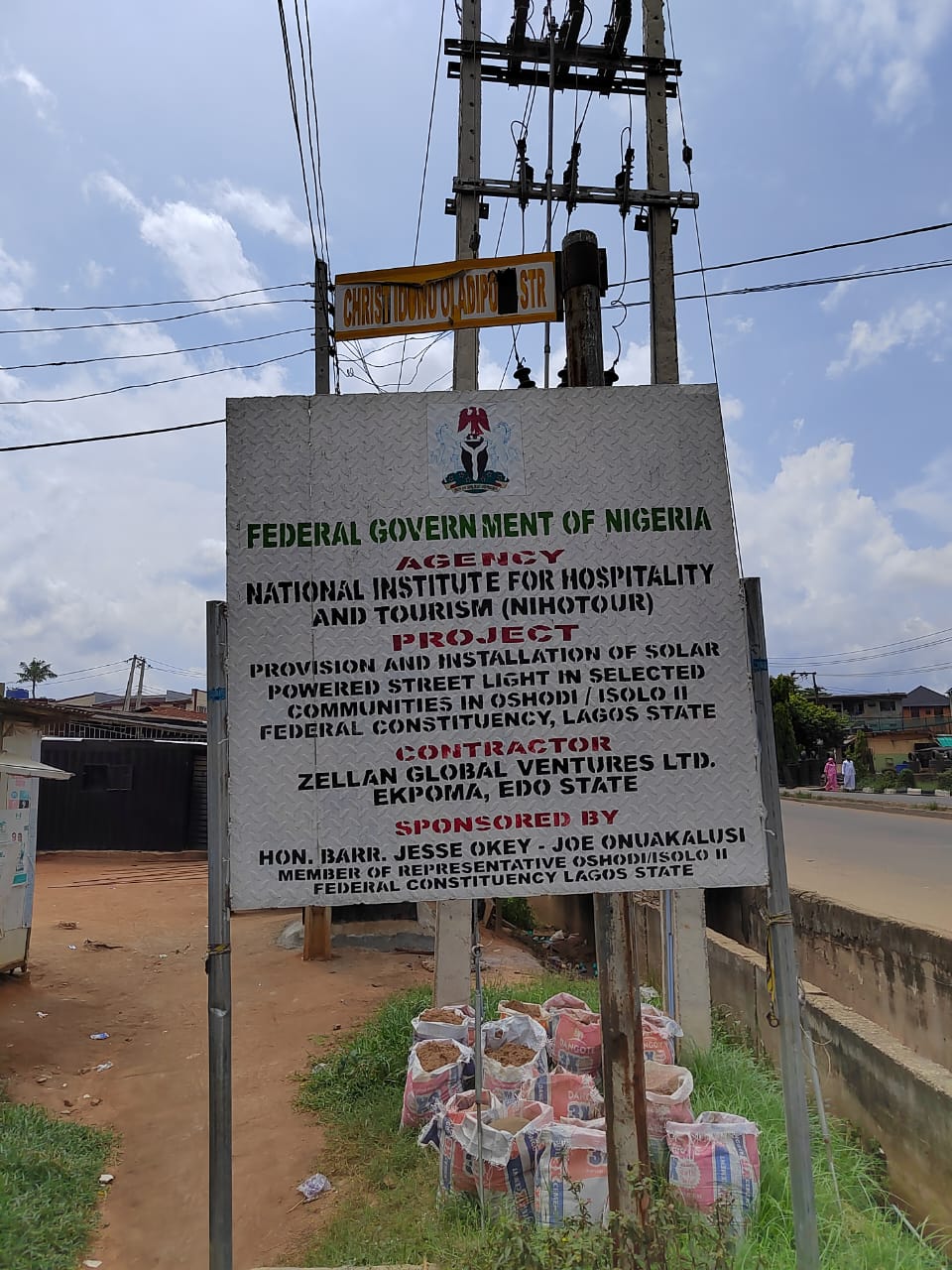
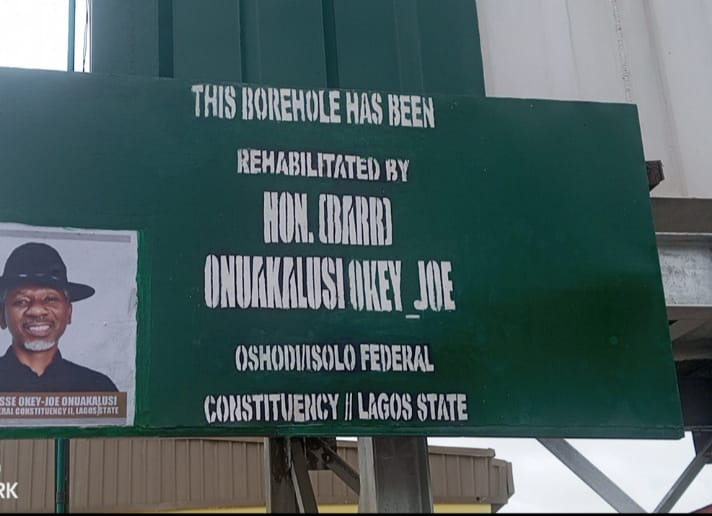
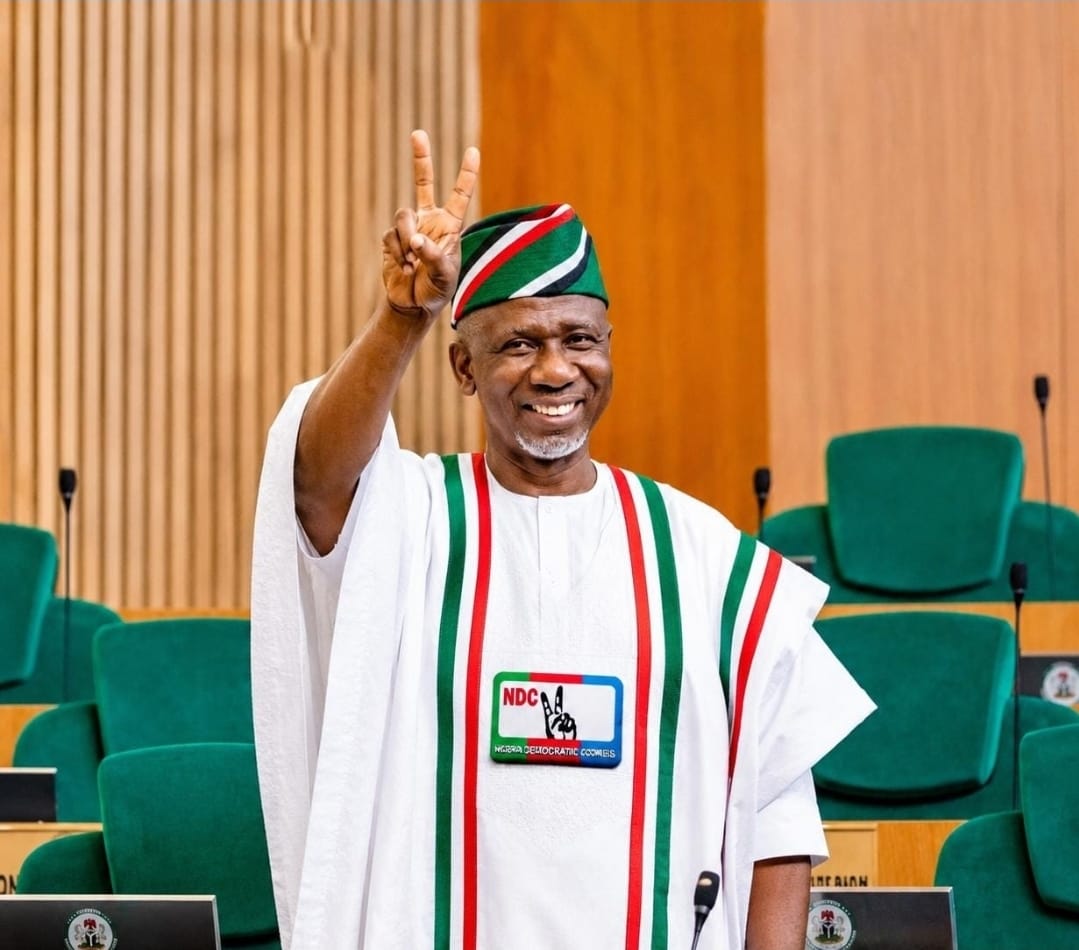
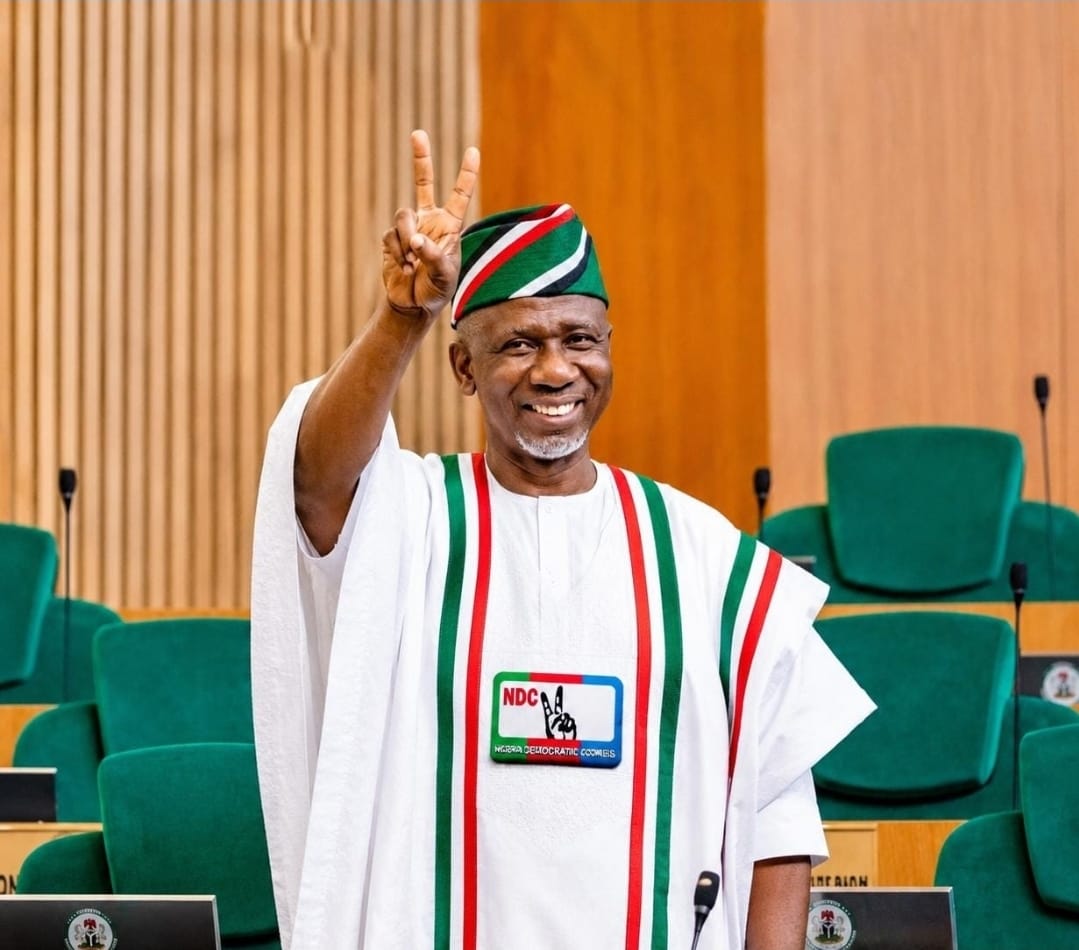
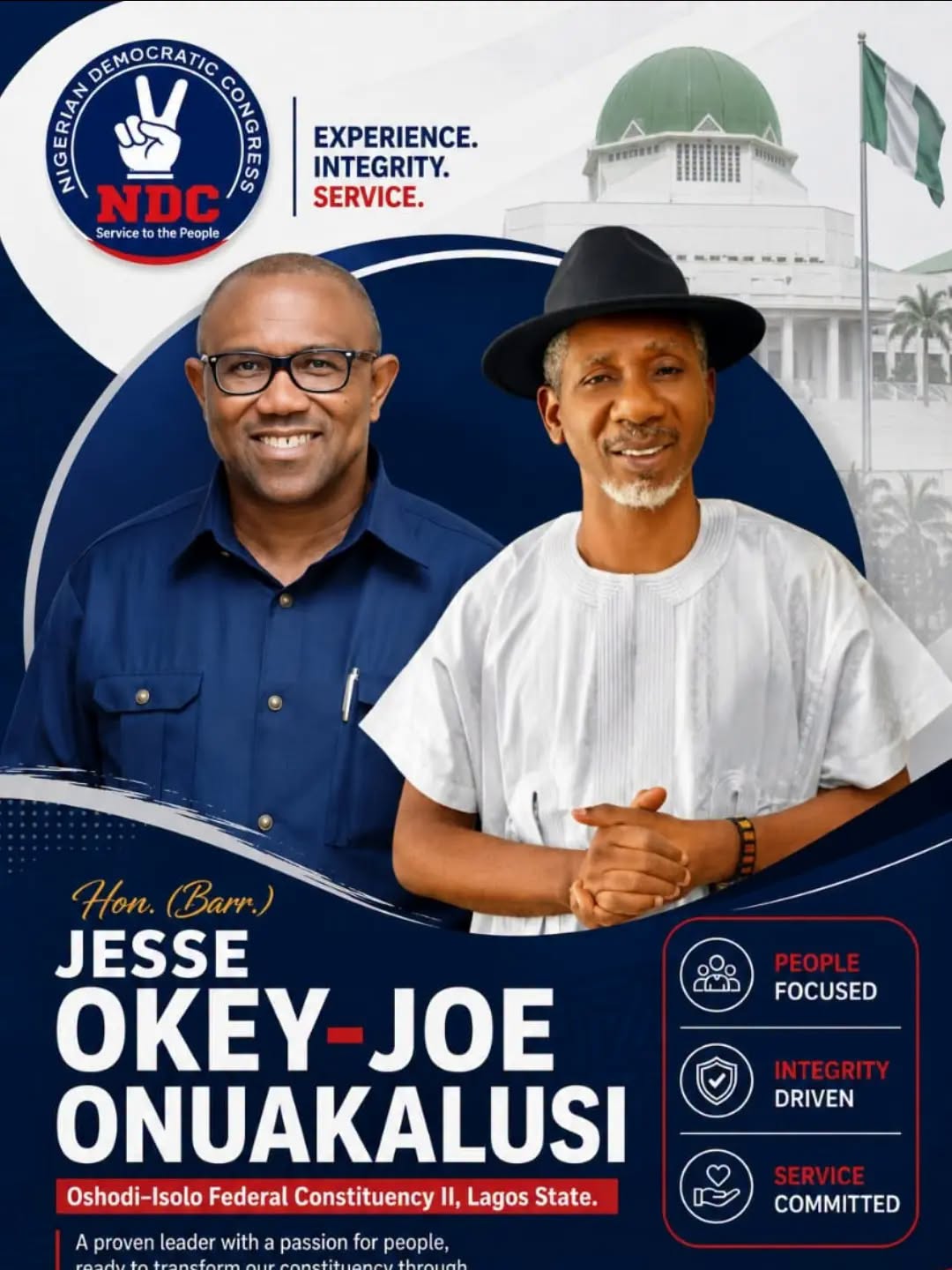
As Nigerians consider the future of their constituencies, the question of returning Hon. Jesse Okey-Joe Onuakalusi to represent Oshodi-Isolo II Federal Constituency should be approached through the same standard of competence, compassion and accountability.
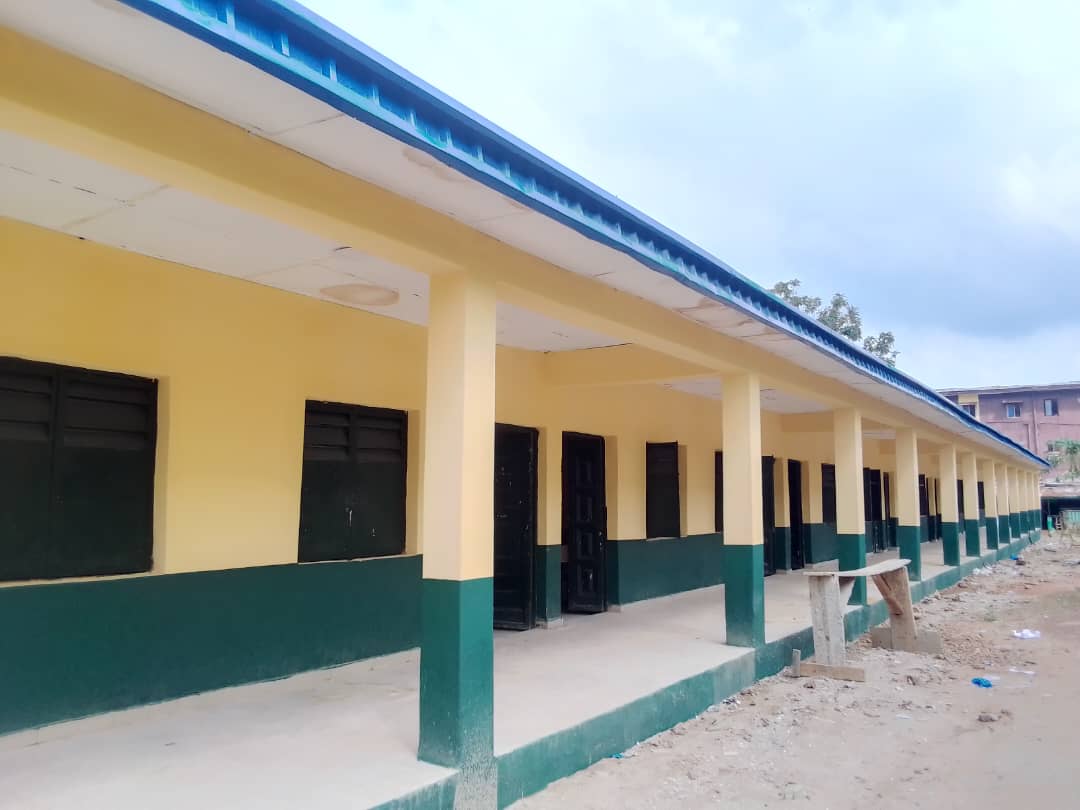
The case for his re-election should be based on his legislative record, constituency engagement, advocacy, delivery of public benefits and ability to represent the interests of his constituents effectively.
His record should be examined alongside the alternatives available to voters. Any documented achievements should be presented clearly, while areas requiring improvement should remain open to public scrutiny.
The same standard must apply to every candidate.
No politician should receive automatic support because of ethnic identity or party loyalty. Equally, no capable leader should be dismissed simply because of where that person comes from.
The purpose of representation is service. The responsibility of voters is to assess that service and make an informed decision.
For Oshodi-Isolo II, the choice should ultimately be guided by the interests of the people and the evidence of what their representative can deliver.
Nigeria Must Choose Accountability Over Tribal Politics
Toluwanisings’ reported hospital ordeal is a painful reminder that the effectiveness of public institutions can have life-and-death consequences.
The struggles of Nigerian households remind us that economic progress must translate into tangible improvements in daily life.
Public questions about major infrastructure spending remind us that accountability is not optional.
These issues are connected by a common principle: government exists to serve the people.
We must reject a political culture in which loyalty to a tribe or party is considered more important than the welfare of citizens. We must also reject the assumption that political disagreement should divide Nigerians along ethnic lines.
Our common interest is a country where citizens can access medical care, feed their families, educate their children, earn a decent living and enjoy the benefits of responsible government.
As Nigerians assess their leaders, let us prioritise competence over sentiment, compassion over indifference and accountability over blind loyalty.
Let us demand better from those who govern us and evaluate our representatives by their records and the public value they create.
Say no to tribal politics. Demand good governance. Let competence and compassion lead. Let Nigeria be okay.
PaulSamuel
Good Governance Advocate
honokeyjoe.com